
Laser Hair Removal in Visakhapatnam for 2027: Benefits, Process and GentleYAG Pro Technology

As you plan skin and grooming appointments for 2027, you may be weighing the time spent shaving, waxing or threading against a longer-term option. Laser hair removal is a clinic-based treatment that aims to reduce unwanted hair over a series of sessions. It can be considered for several facial and body areas, but the right plan depends on your skin, hair, health history and expectations. A device name alone cannot tell you whether treatment will suit you.
At Koncept Skin in MVP Colony, Visakhapatnam, laser hair reduction is planned under dermatologist-led care using the Candela GentleYAG Pro. This article explains what the treatment does, what the technology contributes, who may benefit, what a session involves and how to think about results. It is general information, not a diagnosis or a promise of a particular outcome. For an assessment, see our laser hair removal in Vizag page or request a consultation.
What is laser hair removal?
Laser hair removal, also called laser hair reduction, uses controlled pulses of light to heat pigment in selected hair follicles. The treatment is intended to impair the follicles that are actively producing hair. It does not remove every hair in one visit, and it is more accurate to discuss gradual, long-term reduction than guaranteed permanent, completely hair-free skin.
Hair grows in cycles. At any moment, hairs in one area can be at different stages: active growth, transition or rest. A laser pulse is most useful when a suitable hair is in the active growth phase and contains enough pigment to absorb the energy. A series of sessions, spaced according to the area and your response, is therefore usually needed. With successful treatment, regrowth may become finer, lighter or less dense. Some hair can remain, and maintenance may be considered later.
Laser treatment is different from shaving, which cuts the visible hair shaft, and waxing, which pulls the hair out temporarily. It is also different from electrolysis, which treats individual follicles with an electrical probe. A dermatologist can explain these choices if the colour or texture of your hair makes laser less likely to help.
How does the laser target hair?
The basic principle is selective photothermolysis: a carefully selected wavelength and pulse deliver heat to a target while limiting unwanted heating of surrounding tissue. In hair reduction, pigment called melanin in the hair absorbs the laser light. The absorbed energy becomes heat around the follicle and can reduce its ability to produce hair.
Hair colour and thickness matter because darker, coarser hairs usually contain more pigment for the light to target. White, grey, very light blonde and some red hairs may respond poorly because they have little of the pigment the laser relies on. Fine facial hair can also be less predictable than coarse hair. Hormonal influences may continue to stimulate new growth even after a good response in treated follicles.
Skin tone matters too. The skin itself contains melanin, so the clinician must consider how much energy may be absorbed by the skin as well as by the hair. Recent tanning, naturally deeper skin tones, the treatment area, medicines and previous reactions all influence planning. The goal is not to use the strongest setting; it is to choose a suitable device setting and treatment endpoint for the individual.
GentleYAG Pro technology at Koncept Skin
The Candela GentleYAG Pro is a long-pulsed Nd:YAG laser platform operating at a 1064 nm wavelength. The 1064 nm wavelength reaches more deeply into the skin and is absorbed less by epidermal melanin than shorter wavelengths. For that reason, an Nd:YAG device may be considered for hair reduction in people with darker skin tones when the dermatologist determines it is appropriate. This does not mean that every skin tone, hair type or treatment area can be treated with identical settings or without risk.
GentleYAG Pro should not be confused with every product in the wider Gentle Pro family. Some other Gentle Pro systems combine an Alexandrite wavelength with Nd:YAG; GentleYAG Pro is the Nd:YAG platform. At Koncept Skin, your consultation determines whether this wavelength is a reasonable fit for your concern and what settings, session spacing and precautions are appropriate.
The Gentle Pro platform also includes Candela's Dynamic Cooling Device, or DCD. It delivers a brief cryogen spray at the skin surface around the laser pulse. Cooling is designed to support comfort and protect the epidermis during treatment. It can make a session more manageable, but it does not make treatment painless, remove the need for careful settings or eliminate the possibility of side effects.
Technology is only one part of the result. Diagnosis, skin typing, the operator's training, protection of the eyes, preparation, treatment technique and follow-up all matter. The same machine can be used differently for different people. You can read more about devices available at the clinic on our technology and equipment page.
Potential benefits of laser hair reduction
People consider laser hair removal for different reasons. Benefits are individual and depend on the hair, skin, area treated, consistency of appointments and the body's response.
Less hair growth over time
The main aim is a progressive reduction in suitable pigmented hair. After a course of treatment, some patients notice that fewer hairs return, and that remaining hairs look finer or grow more slowly. The amount of change is not identical for everyone. Facial hair influenced by hormones may need ongoing review or maintenance.
Less frequent shaving or waxing
When hair growth is reduced, some people find that they need fewer routine shaving or waxing sessions. This may be convenient for areas that are bothersome to manage frequently. It does not necessarily remove every hair, and it is sensible to plan around the possibility of occasional regrowth.
Help with recurring ingrown hairs
Coarse, curly hair can sometimes grow back into the skin after shaving or waxing, causing ingrown hairs or shaving bumps. Reducing hair growth in a suitable area may help reduce this cycle for some people. Bumps can have other causes, so a dermatologist should assess persistent, painful or inflamed spots rather than assuming hair removal is the only answer.
Targeted treatment areas
A treatment plan can focus on a specific area, such as the upper lip, chin, underarms, legs, beard line or bikini line, when suitable. The clinician and patient agree on the boundaries before starting. For facial treatment, eye protection and precise technique are especially important because of the proximity of the eyes.
A planned alternative to repeated temporary methods
Laser is a longer-term treatment plan rather than a single quick fix. For people who prefer a clinic-based approach and are suitable candidates, a series of appointments may fit their routine better than frequent temporary hair removal. The consultation should cover the time, cost, potential discomfort, risks and maintenance involved so that you can compare it fairly with other options.
Which areas can be considered?
Depending on the individual assessment, common areas include the face, upper lip, chin, underarms, arms, legs, back, chest and bikini line. Not every area is suitable for every person. The clinician may need to adjust the plan around tattoos, moles, active skin irritation, recent tanning, scars, medicines or other factors. Treatment close to the eyes requires particular care and appropriate protective eyewear.
On the face, clinicians may distinguish between coarse terminal hairs and fine, light-coloured hair. Treating fine hair with unsuitable settings can produce little benefit and, in uncommon cases, stimulate more noticeable growth around the treated area. A proper assessment helps decide whether laser is sensible or whether another approach should be discussed.
Who may be a candidate?
A consultation is useful if you have unwanted coarse, dark hair and want to explore longer-term reduction. Laser hair removal is used by people of different genders and skin tones, but suitability is determined individually. The dermatologist will consider the contrast between your hair and skin, the hair's thickness and colour, the area, your treatment goals and any previous experience with lasers.
Tell the doctor about current medicines and supplements, recent sun exposure or tanning, skin conditions, cold sores, a tendency to scar, prior burns or pigment changes, and any treatments you have already tried. Hormonal symptoms or a sudden change in facial or body hair may call for medical evaluation before a cosmetic plan is made. If you are pregnant, trying to conceive or breastfeeding, discuss timing with your doctor; elective laser hair reduction is often postponed when safety information is limited or the skin and hair may be changing.
Laser may not be useful for white, grey or very light hair. Active infection, open wounds, a significant flare of a skin condition or very recent tanning may mean that treatment should wait. A dermatologist can recommend a patch test or a different method when there is uncertainty. A patch test is one helpful part of assessment, not a guarantee that a reaction cannot occur later.
What happens at a consultation?
The first appointment should begin with your goals and health history, not with the laser handpiece. The doctor asks which areas concern you, how the hair has changed, what methods you use, whether you have had a previous reaction and what result would feel worthwhile. If excess hair growth has developed quickly or comes with other symptoms, that context may change the medical assessment.
The skin and hair are examined in the area you want treated. The clinician may assess skin tone, recent tanning, hair colour and calibre, active irritation and pigmentary risk. You should be able to ask which device and wavelength are proposed, who will perform the treatment, how eye protection is handled, what discomfort to expect, how many visits may be needed and what alternatives are available.
Before you agree to start, ask for a clear plan: the area boundaries, likely session interval, preparation instructions, expected response, possible side effects, cost and follow-up. Good consent includes the limitations as well as the benefits. If a treatment does not seem right for you, it is reasonable to pause and discuss another option.
What happens during a treatment session?
Exact steps vary by area and by clinical protocol. Typically, the skin is checked and cleaned, the treatment boundary is confirmed, and suitable protective eyewear is worn by the patient and clinician. Hair may be shaved beforehand so that the energy is directed toward the follicle rather than long hair sitting above the skin. Follow the clinic's own instructions about when and how to shave.
The clinician places the handpiece against or near the skin and delivers controlled pulses over the agreed area. You may feel warmth, a quick snap or a brief stinging sensation; the feeling differs by person and body site. The DCD cooling spray can support comfort. Tell the clinician promptly if the sensation feels unusually painful or if you are worried about the skin's response.
Session time depends on the size and location of the area. A small facial area generally takes less time than both legs or a larger body area. The clinician may check the skin during treatment and adjust the approach if needed. Afterward, mild redness or swelling around follicles can occur. You receive area-specific aftercare and advice about when the next session should be scheduled.
How many sessions are needed, and when?
There is no single session count that suits every person. Hair cycles differ across body areas, and response depends on hair pigment and thickness, skin characteristics, hormonal influences, device settings and attendance. Many people need a series of sessions rather than one appointment. Your dermatologist can give a practical estimate after assessing you, then review response as the course proceeds.
Appointments are usually spaced by several weeks so that newly active hairs can be assessed and treated at an appropriate stage. The face and body do not always follow the same schedule. Booking too close together does not necessarily improve results; the interval should be based on the area and the hair's regrowth pattern.
After an initial course, some people choose maintenance sessions if hair gradually returns. Hormonal shifts, certain health conditions and natural changes over time can influence regrowth. Maintenance is not proof that the original treatment failed; it may be part of a long-term reduction plan. Your follow-up should consider whether new growth is occurring and whether the plan needs to change.
How to prepare for laser hair removal
Follow the clinic's instructions, because preparation varies by skin, area and device. Share an accurate list of prescription medicines, over-the-counter products and supplements. Mention recent tanning, sunburn, skin procedures, active rashes, cold sores and prior laser reactions. Do not stop a prescribed medicine unless the clinician who manages it tells you to do so.
Many clinics ask patients to avoid waxing, plucking or threading for a period before treatment because these methods remove the hair from the follicle that the laser needs to target. Shaving is commonly allowed and may be recommended close to the appointment. Confirm the timing with the clinic rather than relying on a generic online schedule.
Protect the area from tanning and avoid arriving with sunburn or irritated skin. Tell the clinic if your skin tone has changed since your last session. Remove makeup, deodorant, creams or other products from the treatment area if instructed. If you have a history of cold sores and are having treatment near the mouth, raise it during consultation so that preventive advice can be considered.
Aftercare and what is normal
After laser treatment, temporary redness, warmth, mild swelling or sensitivity can occur. Cool compresses and gentle skincare may be recommended. Keep the area clean, avoid rubbing or picking at it, and follow the clinician's specific guidance about exercise, heat, deodorant, active skincare and sun exposure. Use sun protection as directed, especially for exposed facial or body areas.
For a short period, avoid activities or products that your clinic says may irritate the treated skin, such as very hot showers, sauna, fragranced products or exfoliating actives. Do not apply a new cream or home remedy to a reaction without asking the clinic. Shaving may be allowed between sessions, but avoid waxing or plucking if you have been told to preserve the follicles for future treatment.
Contact the clinic if redness worsens, blisters appear, pain is increasing, the skin looks burned or you develop a concerning rash. Seek urgent medical care for severe symptoms or eye-related symptoms after facial treatment. Clear aftercare instructions should tell you whom to contact and when a review is needed.
Risks and realistic expectations
Laser hair removal is a medical procedure, even when performed for cosmetic reasons. Common short-term effects include discomfort, redness and swelling. Less common but important risks include blistering, burns, infection, scarring, cold sore flare, temporary or lasting lightening or darkening of the skin, and eye injury if protection is inadequate. The risk depends on factors such as skin tone, tanning, settings, technique, the treatment area and aftercare.
Having a qualified, experienced clinician assess the skin and choose settings can reduce avoidable risk, but no clinic should promise that complications are impossible. Do not be pressured by a fixed package or a claim of zero pain. A patch test may be useful in selected cases, and the clinician should explain what it can and cannot tell you.
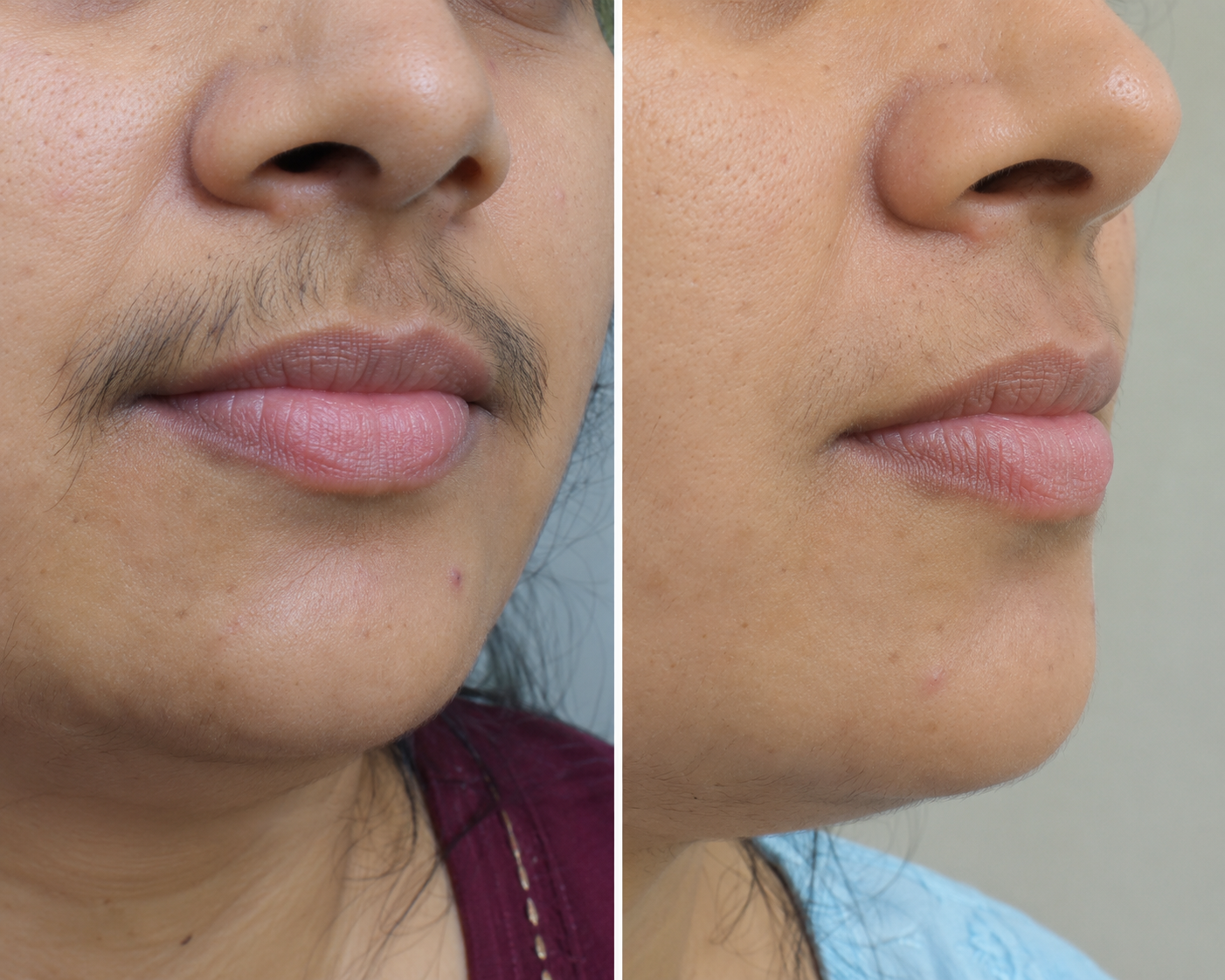
Results are gradual and variable. Laser can reduce suitable hair; it may not remove every hair, and it cannot promise completely smooth skin forever. Some people see a substantial change, while others have a more modest response. Very light hair, hormonal growth and certain facial areas can be more challenging. A treatment plan should be reviewed if the expected change is not occurring instead of simply repeating the same settings without reassessment.
Choosing laser hair removal in Visakhapatnam
When comparing clinics in Visakhapatnam, focus on the consultation and clinical process as well as the machine. Ask whether a dermatologist assesses your skin and hair, how the clinic handles recent tanning and medicines, what the treatment involves, who performs it, how eye protection is provided and how concerns are managed after the appointment. Look for clear answers about risks, maintenance and alternatives.
At Koncept Skin, Dr. Deepthi Balusu, MD (DVL), leads dermatology and aesthetic care in MVP Colony. The clinic is next to KIMS ICON Hospital at Ushodaya Junction. The GentleYAG Pro is one technology used for selected hair-reduction plans; a consultation helps determine whether it fits your skin and hair. You can learn more about Dr. Deepthi Balusu, read the clinic's laser hair removal information or book a consultation.
Frequently asked questions
Is laser hair removal permanent?
It is better described as long-term hair reduction. Hair growth can decrease substantially, but regrowth and maintenance are possible. Individual results vary.
Does GentleYAG Pro work on darker Indian skin tones?
The 1064 nm Nd:YAG wavelength may be considered for darker skin tones because it is less strongly absorbed by epidermal melanin than shorter wavelengths. A dermatologist must still assess skin tone, tanning, hair and health history and choose settings carefully. It is not a blanket guarantee of suitability or safety.
Will the treatment work on white or grey hair?
Laser depends on pigment in the hair and usually works best on coarse, darker hair. White, grey and very light hair may respond poorly. Ask about alternatives during your consultation.
Can I shave between sessions?
Shaving is commonly allowed, while waxing, plucking and threading may be discouraged because they remove the follicle's hair. Follow the specific preparation and aftercare instructions given for your plan.
Is the treatment painful?
Sensation varies by area and person. People may describe warmth or a brief snapping feeling. The integrated cooling system can support comfort, but treatment is not guaranteed to be painless. Tell the clinician if the sensation is unusually intense.
How soon can I go back to normal activities?
Many people resume ordinary activities soon after treatment, but temporary redness or sensitivity can occur. Follow the clinic's advice about heat, exercise, skincare and sun protection for your particular area.
Plan your 2027 hair-reduction consultation
Laser hair removal can be a practical choice for people who want gradual, longer-term reduction in suitable pigmented hair. The benefits come from an appropriate treatment plan, not from a device name alone. If you are considering treatment in 2027, start with an assessment, ask questions and make sure the expected results, session schedule, costs, risks and aftercare are clear before you decide.
Koncept Skin provides dermatologist-led consultations in Visakhapatnam. For clinic details and directions, visit the contact page, or request an appointment.